pe·ri·od·ic (adj.) — recurring at intervals · of the periodic table

The periodic table for cleaner ports.

The elements, fuels, technologies, and green shipping corridors that clean the air at ports and in between — organized, connected, and kept current. Built from Chasing Zero.

elements = solutions = strategies.  A finite set of them. Countless ways to combine.
6categories
25+elements (solutions)
33terminals mapped
84shipping corridors

What is Pieriodic

Pieriodic begins with the Clean Air Action Plan (CAAP) — the joint initiative of the Ports of Los Angeles and Long Beach to cut port-related air pollution.

CAAP strategy=port decarbonization solution=Pieriodic element

CAAP calls them strategies. Pieriodic organizes them as elements — each with its own properties, history, deployments, evidence, stakeholders, and relationships to the system around it.

Why a system, not a list

All the elements. One evolving system.

A port doesn't become cleaner because one solution succeeds. Shore power depends on vessels, terminals, grid infrastructure, utilities, regulations, funding, and people. Alternative fuels ripple through ships, supply chains, bunkering, safety practices, and rules. Every element affects the others.

So ports are complex adaptive systems — networks whose participants respond to one another and adapt as conditions change. Think of a flock of birds or a school of fish: the movement can look chaotic, but it's shaped by local rules, feedback, and relationships. No single bird controls the flock — the larger pattern emerges from the interactions.

The periodic table supplies order. The complex adaptive system supplies movement. Pieriodic brings them together.

Classification
Interaction
Ordered
and stable
Dynamic
and evolving
Same
everywhere
Different at
every port
Structured
properties
Adaptive
relationships
Predictable,
deterministic
Emergent,
nonlinear
Explained by
its parts
Explained
as a whole
Order and change at once — the structure holds; the system moves through it.

One idea, three views

03
Sp
SHORE POWER

What each element reveals

Every solution has a signature.

EnergyElectricitySourceShips
StatusMatureFirst deployed2004, POLA
Depends onUtilities · terminals · vessels · regulation · funding
EnablesReduced at-berth emissions
RelatedGrid capacity · vessel retrofits · terminal infrastructure

The periodic table doesn't organize things — it organizes relationships between properties. Pieriodic records where each solution fits, what it depends on, what it enables, what it complements, what may replace it, where it's been deployed, how it evolved, and why change happened.

Where it could lead

From description to prediction.

Four pillars make Pieriodic descriptive — they explain how ports arrived where they are. A fifth pillar could make it predictive.

Classificationwhat exists?
Interactionwhat depends on what?
Evolutionhow has it changed?
Causalitywhy did it happen?
Predictionwhat comes next?

The fifth pillar

The periodic table wasn't revolutionary only for organizing known elements — its structure predicted elements not yet discovered. Imagine Pieriodic one day finding: "Ports that adopted strategies A, B, and C often went on to adopt D within five years." That's the beginning of a theory of port decarbonization. (Prediction is the long-term ambition, not a claim about the product today — the first step is a reliable history of what happened, where, and why.)

What exists — and what's possible

A periodic table describes what exists. A phase space describes what is possible — all the states a system could reach — and a trajectory moves through it over time. CAAP is one trajectory. Another port may follow a different one. Green shipping corridors create trajectories beyond a single port. Future solutions open trajectories not possible today.
What's new in the field

Periodic by name. Periodic by practice.

Pieriodic isn't a finished catalog. It's a living knowledge system — refreshed as ports worldwide test, deploy, expand, replace, and retire solutions. New elements, deployments, corridors, manufacturers, policies, disputes, and field reports. Every update changes the picture.

Element update

A new solution, deployment, manufacturer, or milestone.

Corridor watch

A green shipping corridor development — and the elements it needs.

Conference notebook

What the industry is discussing, and which questions stay open.

Deployment story

How a port moved an element from demonstration to operation.

Pattern spotted

A relationship or sequence beginning to appear across ports.

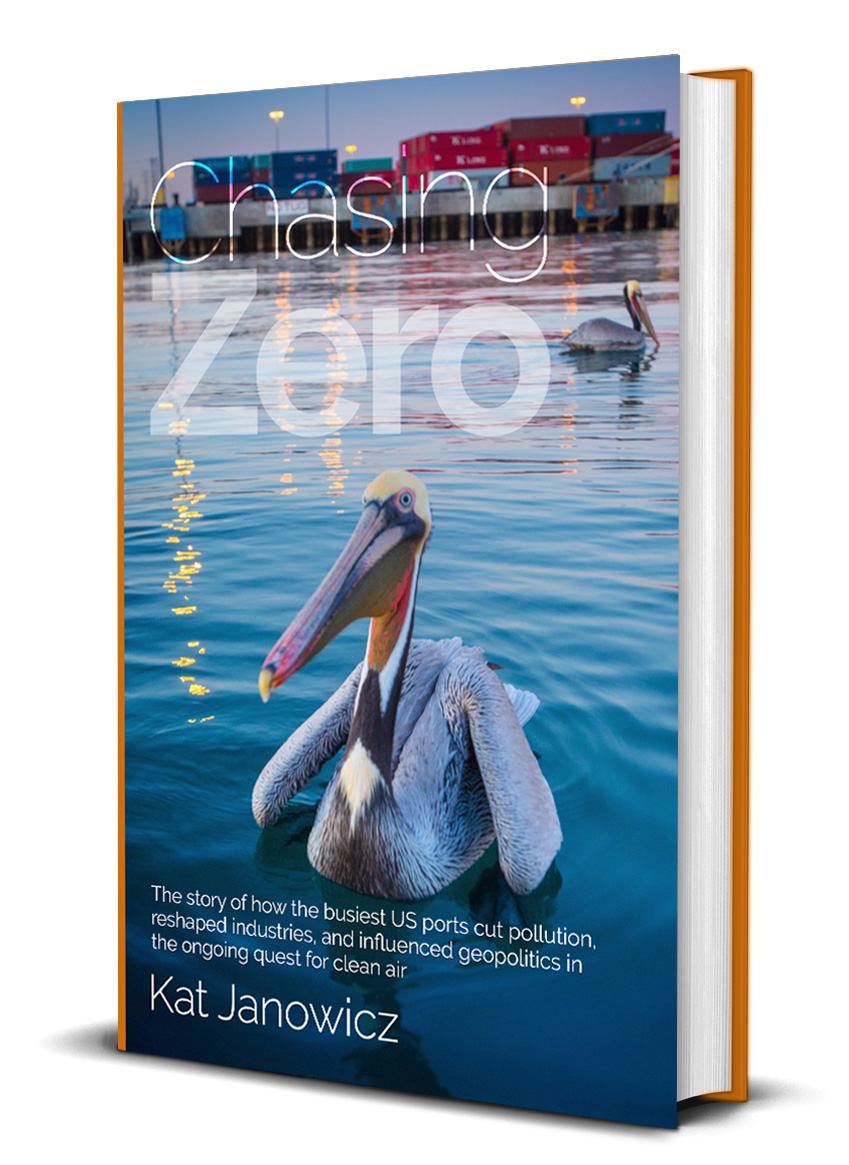
Chasing Zero — book cover

The book behind it

Chasing Zero

Chasing Zero tells the story of how the Los Angeles–Long Beach ports became the world's cleanest — and what it cost, required, and revealed about the future of supply chains, innovation, and the workforce that powers it all.

Read more about the book →
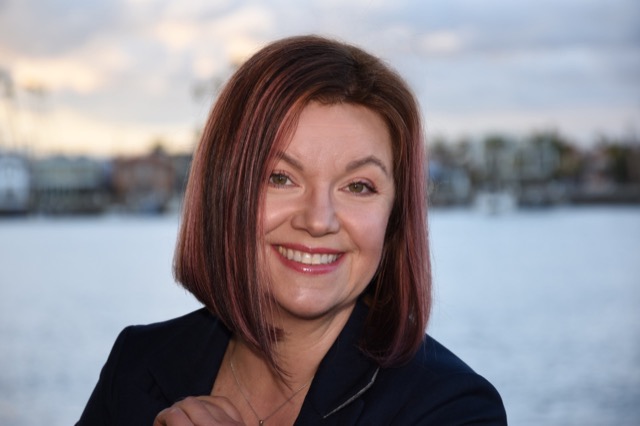
Kat Janowicz

The brain behind it

Kat Janowicz

A big-picture thinker redefining sustainability. Pieriodic turns years of research into a living system others can learn from — and build on. Working on clean ports, fuels, or corridors? Let's talk.

More about Kat → Let's talk →

The engine behind it

Pieriodic is built by Kat Janowicz and operated by 3COTECH — a strategic advisory firm that connects people, ideas, and institutions across ports, transportation, energy, technology, and public infrastructure. Knowing how complex decisions get made, 3COTECH helps organizations build partnerships, weigh clean technologies and risk, and turn technical insight into stories that move important work forward.

Get in touch →

The mark

One wave. Two meanings.

The Pieriodic mark begins with an element cell and becomes a pier. Under the pier is a single thin wave — it places the mark at the water's edge, and a sine wave is periodic: its pattern recurs at regular intervals. The wave quietly connects the port, the name, and the promise that Pieriodic keeps being updated.

A living, curated catalog — not every solution is here. Some remain confidential, some we may have missed, and one person's single strategy can be another's several. Corrections and additions are welcome.